
Being normal is an illness
A psychoanalytic perspective on what we lose when we curate the self.
Forgive me for starting this essay with such a strong self-disclosure. But when I was little (way younger than you think) I lost my faith in god and entered into a profound state of despair. I didn’t know why this was happening to me, but I became preoccupied with death, atheism, and nihilism because they were the only thing that still made sense. I stayed there, in the freezing void of meaninglessness and dissociation, well into adulthood.
Of course, at the time you wouldn’t have guessed any of this from the outside. I was a high-flying student with a good amount of friends and hobbies. I did most things you’d expect from a child-turned-teenager-turned-young-adult.
I was, seemingly, n-o-r-m-a-l. I worked very hard at it and it’s what almost killed me.
I didn’t understand at the time that the reason for my despair was that I’d lost an essential connection to myself. I became entirely oriented to the outer world, preoccupied with fulfilling my parents’ expectations of me, being a good student, being liked, looking attractive. Of course, I was not aware I was performing. To me, I was merely doing what everyone else appeared to do. No one around me talked about feelings or their inner life. No one shared their dreams—did they even have any? Everyone expressed themselves in the same formulaic, overly embellished language, devoid of real feeling and any trace of selfhood.
It’s perhaps a mark of post-communist Romania that our school system entirely relied on memorisation, rather than logic, critical thinking, or (god forbid) creativity. Alongside the trauma of communism, I can see how this contributed to shaping a collective ideal of normality. And yet, the obsession with being normal isn’t limited to such traumatised nations. Paradoxically, even cultures that fetishise individuality still generate their own prescribed ideals of what normal looks like: the narcissistic, main-character energy is nothing more than the flipside of the communist. Neither are truly themselves.
Whether we like it or not, normality greatly preoccupies us. I’d venture out to say that in five-ish years of working as a therapist, there hasn’t been a single week where at least one person hasn’t asked me whether their desires, feelings, aspirations, or preferences were normal. The privacy of the therapy rooms allows for some of the inner world to burst through, tentatively. Will it be considered? Or will its suppression repeat, as it did in the family system and culture, by imposing a new ideal of normality—just better disguised by therapy-speak?

Normotic illness
It was through my recent obsession with contemporary psychoanalyst Christopher Bollas that I found what I had intuited for years: normality is an illness.
For Bollas, normotic illness1 is a way of being that rejects internal states in favour of a materialist approach to life. The normotic doesn’t have any interest in the subjectivity of his experience. If something upsets the inner balance, he is more likely to deal with it by self-medicating (eating, drinking, napping, binging TV) rather than reflecting on it. He does not symbolise, nor dream.
Despite this, the normotic is often content and well integrated. He may look after his body (which becomes an object, rather than an experience). He has friends he can dazzle with the interesting facts he collects. He knows what’s happening in the world and can talk your ear off about the latest events or politics. He can have fantastic taste in movies, art, or wine. He may be an active member of many groups, which give him a stable identity. He is likely pleasant, fun, and always up to something, never too bothered by what’s happening. Where others fall to pieces in response to distress, the normotic may look like the gold standard of “self-regulation”.
It’s hard to imagine there could be anything off about this kind of person. For many of us, the normotic may even be an ideal we aspire to—even one we actively work on in therapy. After all, this is what appears to be valued in the world today. It’s what our parents want for us. It’s what our work colleagues appreciate us for. It’s what therapy influencers tell us we can become, once we purchase their $333 nervous system regulation coaching course.
The tragedy of the normotic is that, in denying his subjectivity, he aims to become, as Bollas writes, “a material object among other man-made products in the object world”—a thing, not a person. In neglecting the inner life, the normotic treats himself as a commodity rather than a subject. Naturally, this extends to others, with whom he cannot connect intimately because they too are objects to him. This does not make the normotic bad—he simply swims in the warm, shallow waters, unaware of the depths.
“A normotic person is concerned with being ‘a good guy’ or a person ‘people would like to have around’. The self is conceived of as a material object, much the way any common object is imagined. And valuing the self is determined only by the external functioning of the self, as it appears to the norm: the person’s treatment of the self as an object has a quality similar to a quality control department’s concern with the functioning quality of a product.”
Christopher Bollas - “Normotic Illness” in The Christopher Bollas Reader
Squeezing the inner world out
It is useless to point this out to the normotic. In fact, trying to connect intimately with such a person can be maddening, as they just cannot tell you how they feel, nor hear about your inner life. I know people who only speak about their inner states by describing the weather, obsessing over current events, or responding to feeling-questions using proverbs or expressions devoid of any personal involvement. When faced with grief or distress, the normotic will appear a master in radical acceptance (it is what it is) or, as Bollas found, he might become overly invested in understanding the issue threatening to pull him under, or throwing himself completely in work or cleaning the house. What he absolutely won’t allow is to be dragged down by his own experience—oftentimes because he genuinely doesn’t know how to do that.
Because of the lack of subjectivity, Bollas notes that the normotic gives the impression of someone still unborn. Instead of becoming himself, he creates a self (although this is hardly a creative act) by adopting a culturally-acceptable persona. As another psychoanalyst, Erich Fromm writes, he “becomes exactly as all others are and as they expect him to be”. He remains on the surface of life, oblivious to the unconscious and surrounded by objects (people and things) that facilitate his sense of self. Unable to symbolise and imagine, the normotic hoards objects: partners, houses, promotions, children, holidays, art, clothes, cars.
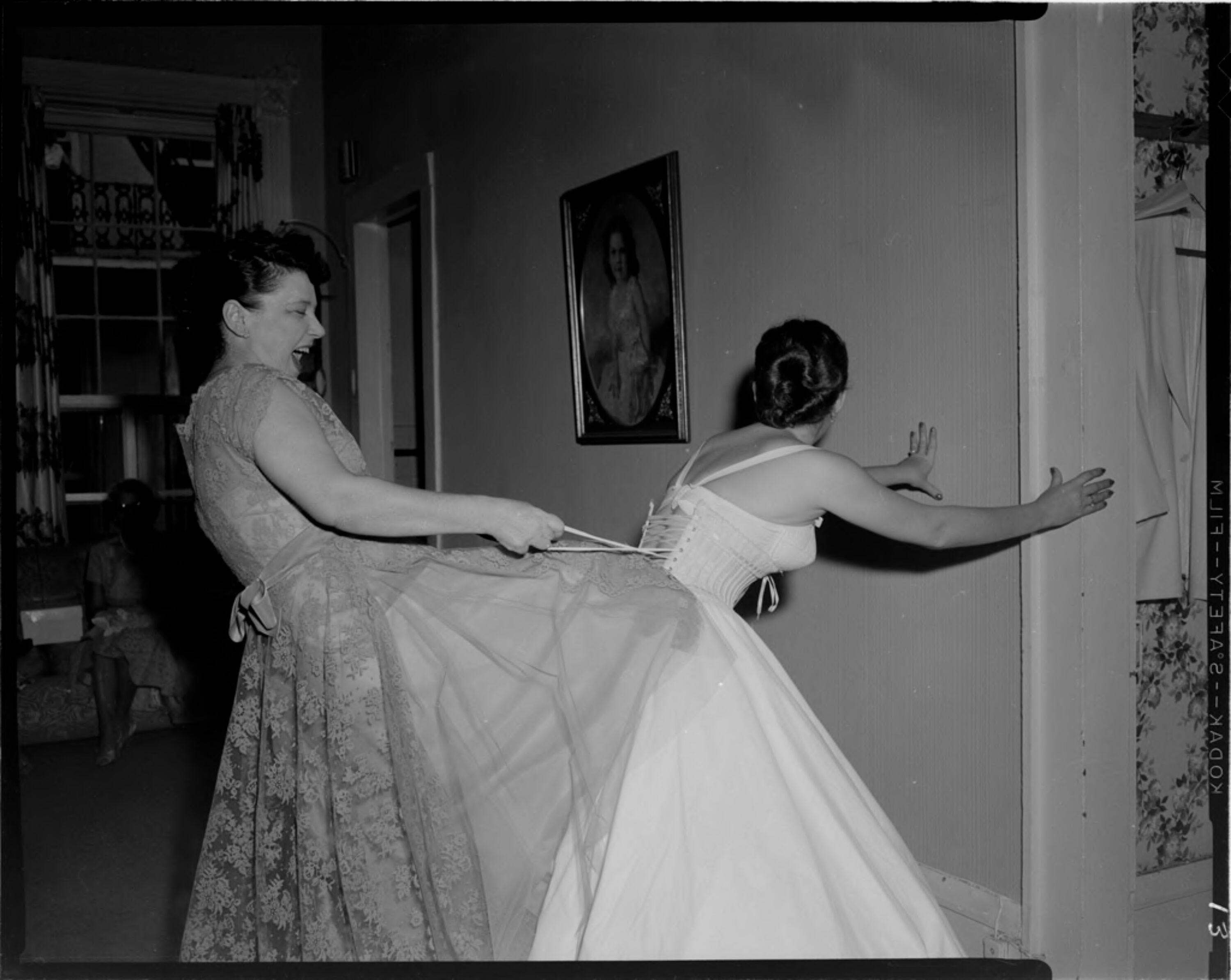
It may be surprising to read that being normal is not the achievement our culture pretends it is, but an illness. Bollas’ work is a good reminder that a lot of what we may identify as our own ideas, opinions, or even feelings do not, in fact, belong to us. We all parrot things we hear on TV or social media. We internalise our parents’ expectations of us and find ourselves living false, joyless lives. We follow gender norms that don’t always reflect how we feel. We tweak our taste to fit whatever our friend group likes. We buy into the self-purification project, so highly praised by social media therapy culture, and forget that we have a Self that longs for diversity, weirdness, imperfection, completeness—anything but normality.
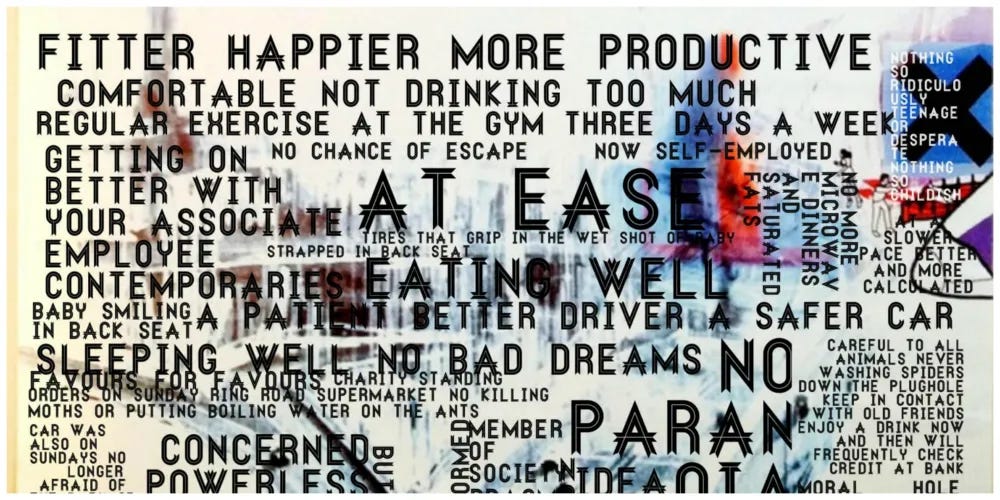
When this becomes an overarching orientation in life, we risk sacrificing our True Selves on the altar of normality and turning normotic. Instead of individuating, we become curators of a False Self: tame, palatable, a good person liked by all (or, more cynically, “a pig in a cage on antibiotics”, according to Radiohead). We lose the inner experience and become dependent on objects to reflect our existence back to us: as Bollas writes, the holiday photos become more important than the experience of visiting the new place. We are no longer transformed by experiences, but assume the role of collectors of moments that we can scroll back through to remember who we are.
How we become normotic
The lack of transformation and objectification point to a lack of aliveness. In psychoanalytic terms, the normotic is run by the death instinct. He continues to kill off his inner states, fearing his unconscious and refusing individuation.
This was constellated in him early on, when his normotic parents killed off his True Self by only validating achievements and socially accepted parts, but not his creativity. Thanatos ruled the household. The parents did to him what they had done to themselves: they showed him a collective way of being that provided safety and belonging. Who the child really is didn’t matter because the normotic family is a group of objects amongst objects.
Bollas’ description of the child of normotics perfectly mirrors the experiences I described at the start of this essay. For the still-feeling-and-imagining child, his parents appear to be possessed (and they are) in a way that tries to squeeze all life out of existence. Such a child may feel appalled by how his parents live. In my experience, the child senses the denied unconscious of the family and, if he is sensitive, can become overwhelmed by it. The death drive that possesses the entire group turns into destructive impulses that the child is unprepared to face—he may become suicidal, self-harming, or outwardly aggressive in an attempt to fight off what the family is unconsciously leaving him to carry. If the child continues to fight for his Self, he can become the scapegoat: the dumping ground for all that’s deemed abnormal by his normotic family.
Whether he readily accepts the normotic adaptation or fights against it and becomes the scapegoat, the child of normotics often is emptied of his Self and develops a False Self to survive.
Destruction as a way of coming into being
2The cost the normotic unwittingly pays for his acceptance and safety in the world is his soul. Objects are static. They don’t create other objects—they get used and destroyed by others. They slowly decay, get forgotten, or end up in a landfill. How can we be transformed anyway? As objects, transformation would mean destruction.
And yet destruction is exactly what the normotic ideal needs. Eventually, such a person encounters a situation that platitudes or sentimentality cannot gloss over. There’s a real possibility that the False Self only hardens in response—we all know people who, in their old age, still refuse to turn inwards and remain unable to truly hear us and know us intimately.
But there’s also hope that the mask shatters: feelings come rushing in, the body beings to scream through symptoms or illness, a loss so profound that the normotic can no longer turn to objects for self-soothing. That’s when the normotic discovers the True Self they had left behind: a child who dreams, imagines, plays, creates, and feels deeply.
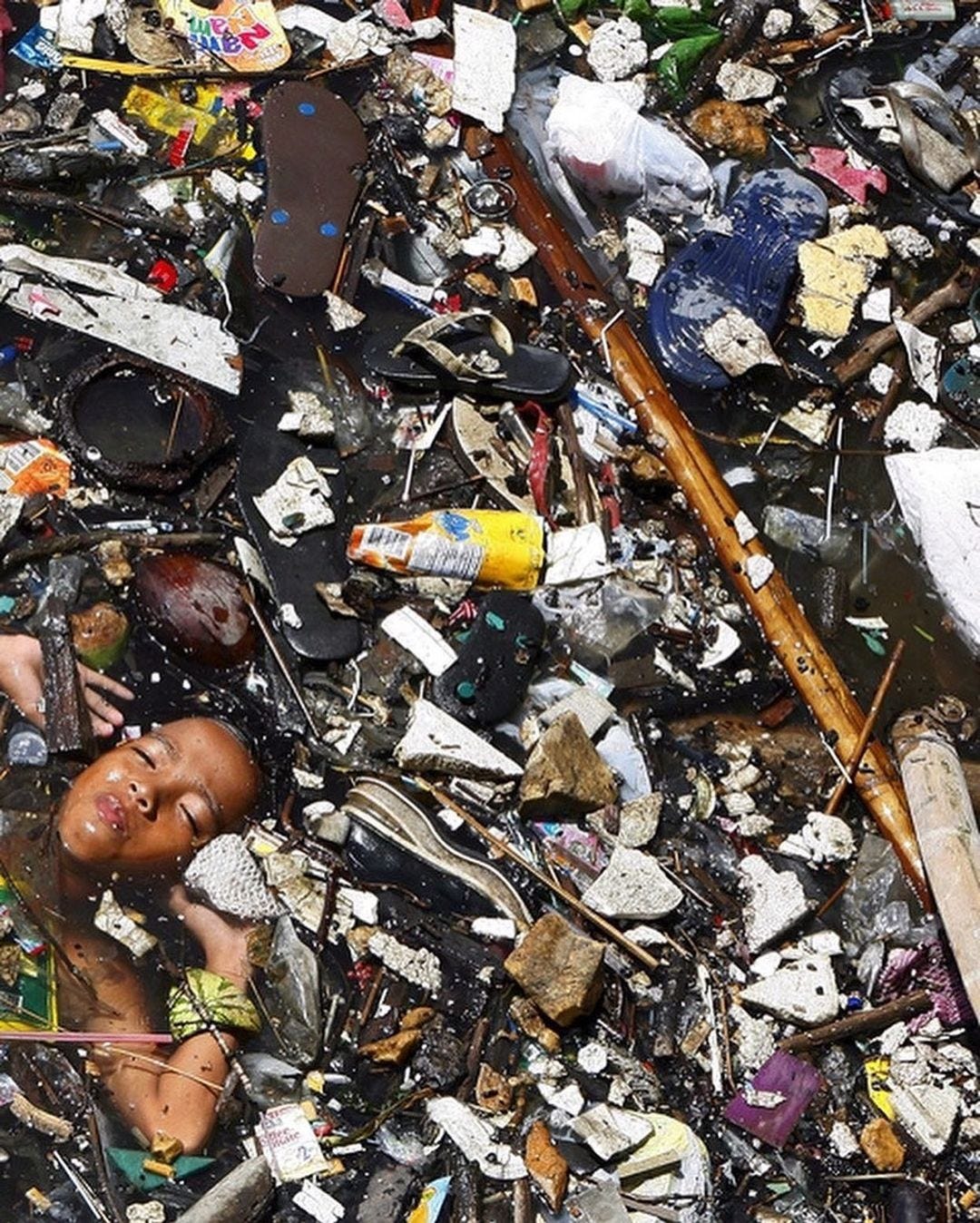
Destruction of the normotic ideal must also happen collectively. This feels especially imperative now, as the unfortunate combination of people using AI for “therapy” and the social media nervous-system-healing influencers are reinforcing normopathy: an obsession with analysing, staying calm, responding “correctly”, and essentially hiding the Self behind borrowed therapy language. AI-speak and therapy-speak are already flattening people’s expression into formulaic ways of talking about oneself. Both are contributing to a dehumanisation of being in the name of efficiency and health, neglecting that experience is often ambiguous or ineffable, or that things take a while to be processed.
Decades before Bollas, Erich Fromm warned against how “many psychiatrists, including psychoanalysts, have painted the picture of a ‘normal’ personality which is never too sad, too angry, or too excited”3. This is why my sense is that therapy itself must confront its normotic assumptions—starting with the often unexamined power dynamics that lead therapists to think they know better what their clients’ lives should look like. This includes real respect for other cultures and neurotypes for whom balance, wellbeing, or health may look very different than our Western ideal. As I wrote before, it may not be about trying to make the entire unconscious conscious (because that’s foolish), but about learning to tolerate some darkness and obscurity in the self.
If the normotic analyses to death in order to avoid feeling, could our task be to feel our way through the darkness, in awe of its mystery? Could we learn to love the soul’s beauty without trying to fashion it into something we can consume?
If you enjoyed this essay, you might also like:


Christopher Bollas, Normotic Illness in The Christopher Bollas Reader.
A nod to Sabina Spielrein, a former student of Jung and Freud’s, who wrote a paper with that title in which she first develops what Freud would a few years later describe as the death instinct and narcissism. Spielrein was an immensely creative theorist and analyst.
Erich Fromm, Fascism, Power, and Individual Rights.
Was just talking to my friend about this. How this apocalypse is such a great time to rip up your old consensus reality contract.
In the past the facade of ‘the normal life’ was harder to get people to see. But the facade is cracking at last. All the ways that were supposedly safe (yet soul-destroying) are now seen to have never been safe in the strange game we play in the planet.
The root problem is the fight for our own sovereign freedom.
I love your writings Maria and this concept feels so important in our world today! I hadn’t heard of this term or Christopher Bollas but I found myself nodding throughout! Thank you for sharing !